
Blog
SoftWave TRT vs. PRP (Platelet-Rich Plasma): Which Regenerative Treatment Is Right for You?
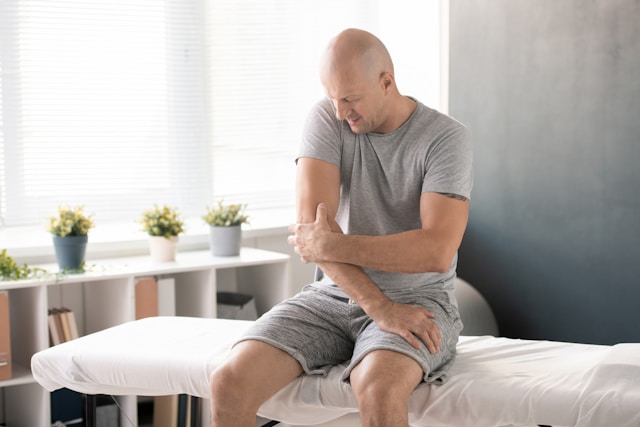
Weighing Your Regenerative Options in Royersford, PA?
If you are living with a nagging joint, a stubborn tendon, or an old injury that just will not settle down, you have probably started researching regenerative treatments. Two names come up again and again: SoftWave TRT and PRP (Platelet-Rich Plasma). Both aim to support your body's own repair process rather than simply masking pain, but they work in very different ways. Understanding those differences is the first step toward choosing the option that fits your body, your comfort level, and your goals.
At Beacon of Life Chiropractic in Royersford, PA, Dr. Dan McClimon helps patients sort through these choices with honest, plain-language guidance. SoftWave TRT is a non-invasive, needle-free, drug-free technology that Dr. McClimon offers as part of a whole-person approach to healing. Below, we compare it fairly with PRP so you can walk into a conversation already informed.
What Is PRP (Platelet-Rich Plasma)?
PRP is an injection-based therapy. A clinician draws a sample of your blood, places it in a centrifuge to concentrate the platelets, and then injects that platelet-rich portion back into the injured area. Platelets carry growth factors, and the idea is that delivering a concentrated dose to a damaged tendon, ligament, or joint may help stimulate a localized healing response.
PRP has been used for a range of musculoskeletal concerns and is popular in sports medicine settings. Because it uses your own blood, many patients appreciate that it does not introduce a foreign substance. It is, however, an invasive procedure. It involves a blood draw, needles, and a targeted injection, which some people find uncomfortable. Results and protocols can vary, and PRP is often not covered by insurance.
What Is SoftWave TRT?
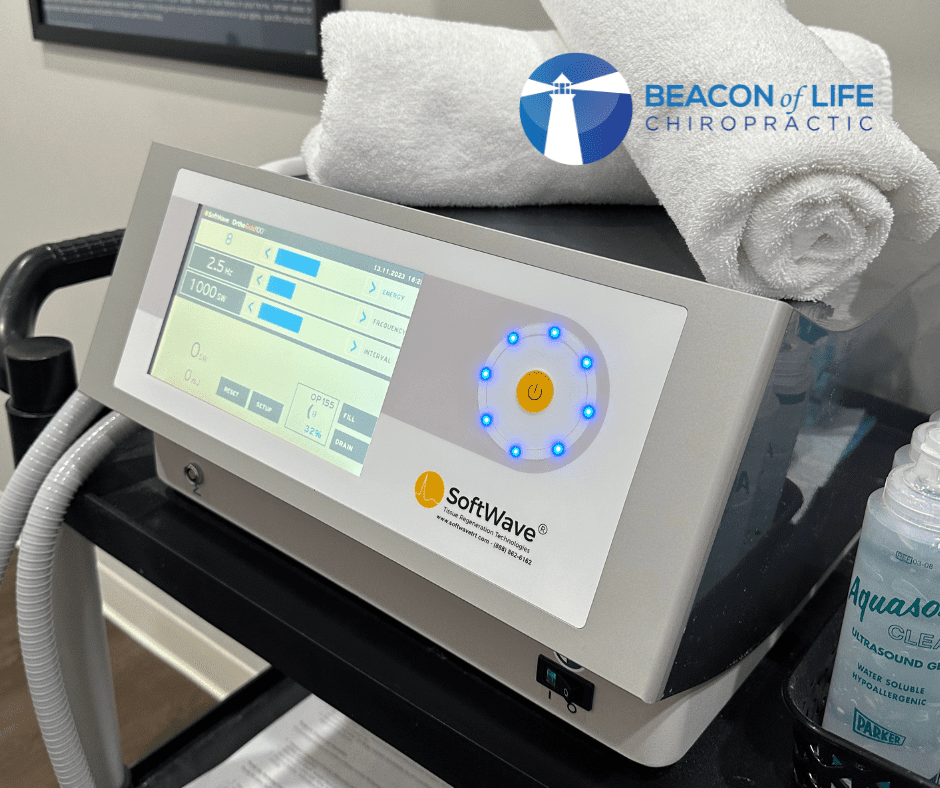
SoftWave TRT takes a completely different path. Instead of needles, it uses electrohydraulic, spark-generated broad-focused acoustic waves delivered through a patented parabolic reflector. This makes it the only broad-focused shockwave technology, distinct from radial, electromagnetic, and piezoelectric devices. Those broad-focused waves penetrate deep into tissue and are designed to trigger your body's natural healing cascade across a wider treatment area.
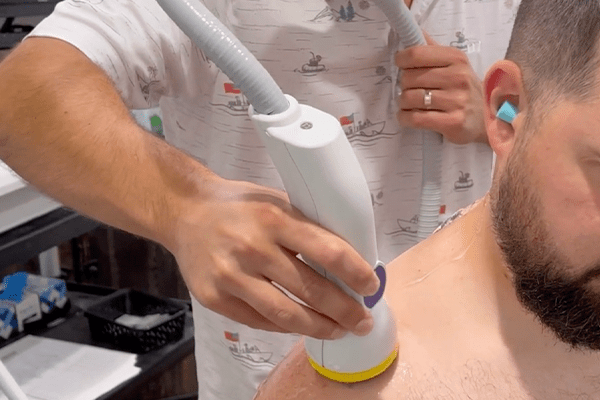
The experience is straightforward. There are no needles, no drugs, no surgery, and no downtime. Sessions typically last about 10 to 15 minutes, and most patients move through a series of visits over roughly six to eight weeks. One feature many patients like is that the healing process is designed to continue for weeks and even months after the final session, as the body carries on the repair work that was set in motion.
How SoftWave Helps Support Healing
SoftWave TRT is designed to work with your biology rather than around it. Here, in plain language, is what the acoustic waves are thought to encourage:
- Resident stem cell activation: the waves may help activate and recruit your body's own stem cells toward the treated area.
- New blood vessel growth (angiogenesis): signaling factors such as VEGF and eNOS are associated with improved local circulation and temporary increases in blood flow.
- Cell proliferation and collagen support: factors like PCNA and BMP are linked to tissue repair and connective tissue building.
- Inflammation modulation: the therapy is designed to help calm and balance an overactive inflammatory response.
- Cellular housekeeping: it may support toll-like receptor regulation and the clearance of aging (senescent) cells that can slow recovery.
SoftWave is FDA-cleared for the activation of connective tissue, a temporary increase in blood flow, and the temporary relief of minor muscle and joint pain. As always, individual responses vary, and no therapy can guarantee an outcome.
SoftWave TRT vs. PRP: A Side-by-Side Look
Both approaches share a common goal of supporting your body's repair systems, so the right choice often comes down to how the treatment is delivered and how you feel about that experience.
Invasiveness and Comfort
PRP requires a blood draw and one or more injections into the target site. SoftWave TRT is fully non-invasive: the applicator rests against your skin, so there are no needles and no incisions. For patients who are needle-averse or want to avoid a procedure entirely, this is a meaningful difference.
Downtime and Convenience
PRP may involve some soreness at the injection site and short activity restrictions afterward. SoftWave sessions are quick, and because there is no downtime, many patients return to their normal day right away.
Treatment Area
PRP is a pinpoint injection into a specific spot. SoftWave delivers broad-focused waves across a wider region, which can be helpful when discomfort is diffuse or when the surrounding tissue could benefit from improved circulation.
Medications and Substances
PRP uses a concentrated portion of your own blood. SoftWave introduces nothing into the body at all: no drugs, no injections, no biologics. It is a drug-free, needle-free option from start to finish.
If you are weighing these choices and want a clear, pressure-free explanation of whether SoftWave TRT fits your situation, reach out to our Royersford team. Schedule a consultation with Dr. Dan McClimon today and get answers tailored to your body.
Which Option Might Be Right for You?
There is no single answer that fits everyone, and both therapies have a place. PRP may appeal to patients who are comfortable with injections and are working with a provider who recommends that route for a specific concern. SoftWave TRT may be the better starting point for people who want to avoid needles and downtime, who prefer a drug-free path, or who want to try a non-invasive option before considering anything more aggressive.
Many patients also appreciate that SoftWave can be part of a broader chiropractic care plan. Because Dr. McClimon looks at the whole body, SoftWave TRT can complement adjustments, movement, and other supportive care rather than standing alone. The technology has been studied at leading institutions and is used by clinicians who work with professional and collegiate athletes, which speaks to its growing role in modern recovery.
The most important step is an honest conversation. A thorough evaluation helps determine whether your issue is a good candidate for regenerative support and which approach aligns with your health picture. Neither SoftWave nor PRP replaces medical advice, and a personalized assessment is always the responsible way to begin.
Ready to Take the Next Step?
If a needle-free, drug-free path to supporting your body's own healing sounds like the right fit, let's talk about whether SoftWave TRT is a smart choice for your situation. Our Royersford team is ready to walk you through your options with no pressure.
Request your SoftWave Therapy new patient visit online today
Contact Beacon of Life Chiropractic
Beacon of Life Chiropractic
70 Buckwalter Road #412
Royersford, PA 19468
Phone: (610) 474-2481
Our Main Office Website: https://www.gobeaconhealth.com
‹ Back



 70 Buckwalter Road #411