
Blog
Why the Parabolic Reflector Makes SoftWave Unique Among Shockwave Devices
Why Does the Parabolic Reflector Set SoftWave Apart in Royersford, PA?
If you have researched shockwave therapy, you have probably noticed that not every device works the same way. Some machines buzz on the surface of the skin. Others use magnets or crystals to create their waves. SoftWave TRT takes a very different engineering path, and at the center of that difference sits one patented component: the parabolic reflector. For patients in Royersford, PA who want a clearer picture of why this technology stands apart, understanding the reflector is the fastest way to see what makes SoftWave unique.
At Beacon of Life Chiropractic, Dr. Dan McClimon uses SoftWave TRT to support the body's own healing response for people dealing with stubborn pain and slow-healing tissue. You can learn more about the practice at Beacon of Life Chiropractic. This article explains how the parabolic reflector and the electrohydraulic spark-gap generate broad-focused acoustic waves, and why that specific design produces a wide, deep healing zone that other shockwave categories are not built to match.
The Engineering Behind the Wave
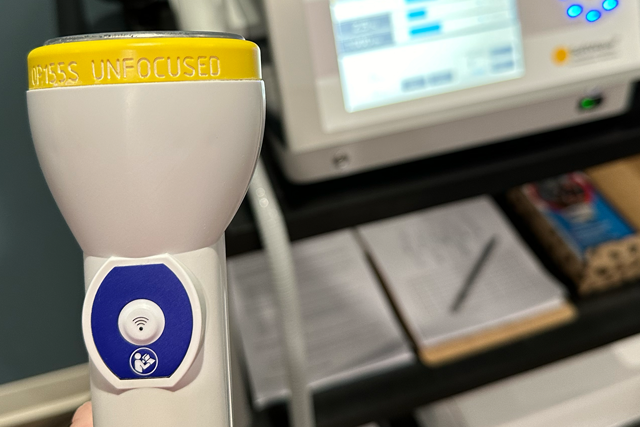
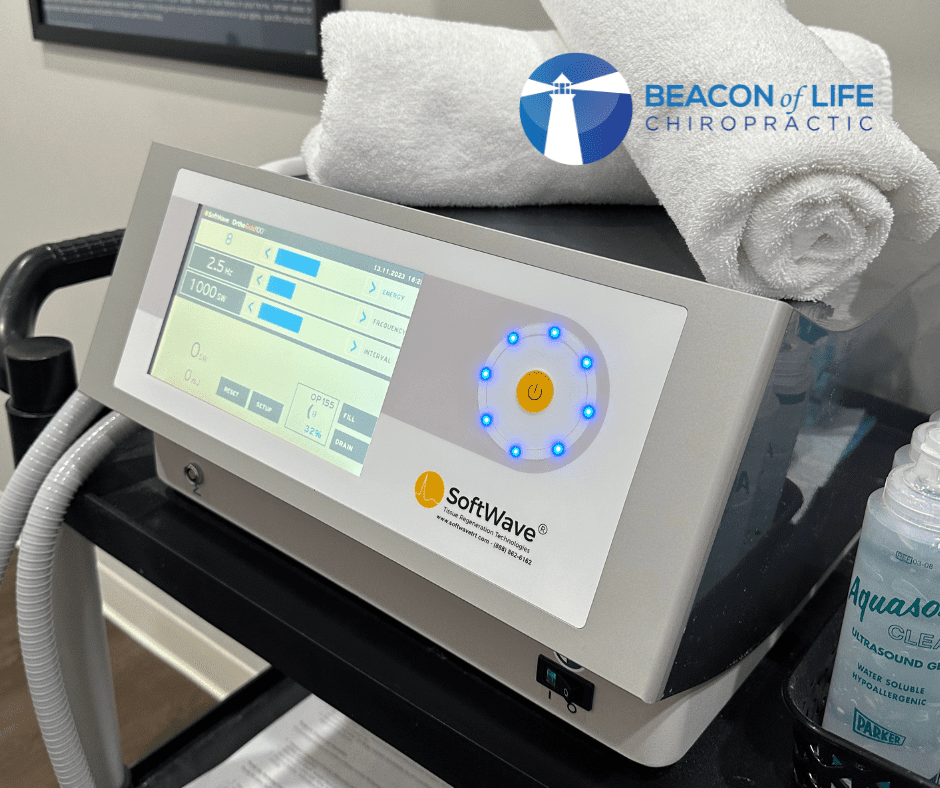
SoftWave TRT is an electrohydraulic device. Inside the applicator, a small spark is generated across a spark-gap that sits within a fluid-filled housing. That spark creates a rapid acoustic event, and here is where the reflector does its work. The spark energy is aimed into a patented parabolic reflector, a precisely curved surface that gathers the acoustic energy and shapes it. Instead of firing energy to a single tight point, the parabolic geometry spreads that energy into a broad, unfocused pattern that still carries meaningful depth.
This is why SoftWave is described as the only true broad-focused shockwave. The reflector is not a marketing label. It is the physical part that determines the size and shape of the treatment zone. Because the curve of the reflector distributes the spark-generated wave outward, the therapy covers a wide area of tissue in a single pulse while still reaching structures below the surface.
How SoftWave Compares to Other Shockwave Categories
Shockwave and pressure-wave devices generally fall into a few groups, and each creates its wave in a different way. Knowing the differences helps explain why the parabolic reflector matters.
- Radial pressure wave: These devices use compressed air to drive a projectile against an applicator head. The result is a pressure wave that is strongest at the skin and fades quickly as it travels deeper. Radial devices are common, but their energy is concentrated near the surface.
- Electromagnetic: These systems use a coil and a membrane to create a focused wave that converges on a narrow point deep in the tissue. Focused energy can be useful, but the treated zone is small, which can require very precise targeting.
- Piezoelectric: These devices use crystals that expand when charged, creating a highly focused wave aimed at a tight focal point. Again, the healing zone is narrow.
- Electrohydraulic with a parabolic reflector (SoftWave): The spark-gap generates the wave and the reflector broadens it. The outcome is a wide, deep zone rather than a pinpoint or a surface-only effect.
The takeaway is straightforward. Radial waves tend to stay shallow. Electromagnetic and piezoelectric waves go deep but narrow. SoftWave is designed to be both broad and deep, and the parabolic reflector is the reason that combination is possible.
Why a Wide, Deep Healing Zone Matters
Pain and injury rarely live in one perfect pinpoint. A sore shoulder, an aching knee, or a chronic tendon problem usually involves tissue across a region, along with the surrounding structures that support it. A broad-focused wave is designed to reach that whole region in fewer passes, which may make treatment more comfortable and more complete. Because the wave also carries depth, it is built to reach tissue that surface-only devices may struggle to affect.
This broad and deep coverage is what allows SoftWave to engage the body's healing response across a meaningful volume of tissue rather than at a single dot. For many patients, that translates to a treatment experience that feels thorough while remaining non-invasive.
How SoftWave Helps the Body Heal
The parabolic reflector shapes the wave, but the real value is in what that wave asks the body to do. SoftWave TRT is designed to trigger the body's own regenerative cascade. In plain language, here is what the therapy is intended to encourage:
- Stem cell activation: The acoustic energy is designed to signal resident stem cells to activate and migrate toward areas that need repair.
- New blood vessel growth: Through pathways involving VEGF and eNOS, the therapy aims to support angiogenesis, the formation of new blood vessels that carry oxygen and nutrients.
- Cell proliferation and collagen: Signals linked to PCNA and BMP are associated with cell proliferation and the collagen building that supports connective tissue.
- Inflammation modulation: The therapy is intended to help modulate inflammation and regulate toll-like receptors as part of a healthier repair environment.
- Cellular cleanup: SoftWave is also associated with helping clear senescent cells, the worn-out cells that can slow healing.
These are mechanisms the therapy is designed to support. Individual results vary, and many patients report gradual improvement rather than an instant fix. The healing response can continue for weeks and even months after the final session, because the body keeps responding after the treatment series ends.
If you are in Royersford, PA and you are curious whether SoftWave TRT is a fit for your situation, the clearest next step is a conversation with Dr. Dan McClimon. You can request a SoftWave consultation online and get answers specific to your body and your goals.
What to Expect From a SoftWave Session
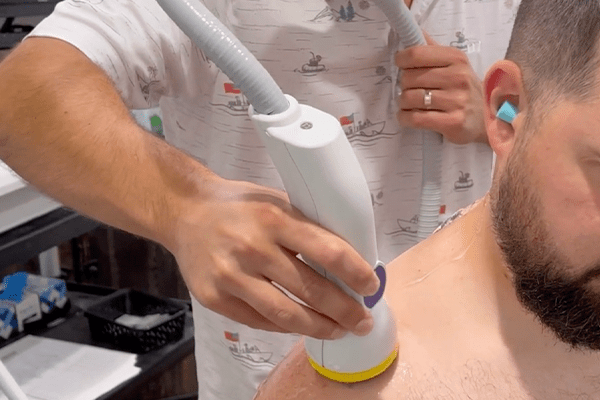
SoftWave TRT is non-invasive. There are no needles, no drugs, no surgery, and no downtime. A typical session runs about 10 to 15 minutes, and most patients follow a series of sessions over roughly 6 to 8 weeks. During treatment, the applicator is moved across the target region, and the broad-focused wave does its work across that area. Many people describe the sensation as a firm tapping. Because there is no recovery period, patients generally return to their day right after.
It is worth noting how SoftWave TRT is used and studied. It has been examined at leading institutions and is used by clinicians who work with professional and collegiate athletes. That kind of use reflects a therapy meant to support serious recovery goals, though your own plan will always be tailored to your needs.
The Bottom Line on the Reflector
The parabolic reflector is not a small detail. It is the engineering choice that separates SoftWave from radial, electromagnetic, and piezoelectric shockwave devices. By pairing a spark-generated wave with a patented curved reflector, SoftWave produces broad-focused acoustic energy that is designed to be wide, deep, and non-invasive. For patients weighing their options in Royersford, that unique design is a big part of what makes SoftWave worth a closer look.
Ready to Take the Next Step?
If you want to know whether the broad-focused technology behind SoftWave could support your recovery, the team at Beacon of Life Chiropractic is ready to help. Reach out today and take the first step toward feeling better.
Request your SoftWave Therapy new patient visit online today
Contact Beacon of Life Chiropractic
Beacon of Life Chiropractic
70 Buckwalter Road #412
Royersford, PA 19468
Phone: (610) 474-2481
Our Main Office Website: https://www.gobeaconhealth.com
‹ Back




 70 Buckwalter Road #411